
Success story · EV Chargers · Electromobility
M2M and IoT connectivity for EV charging infrastructure.
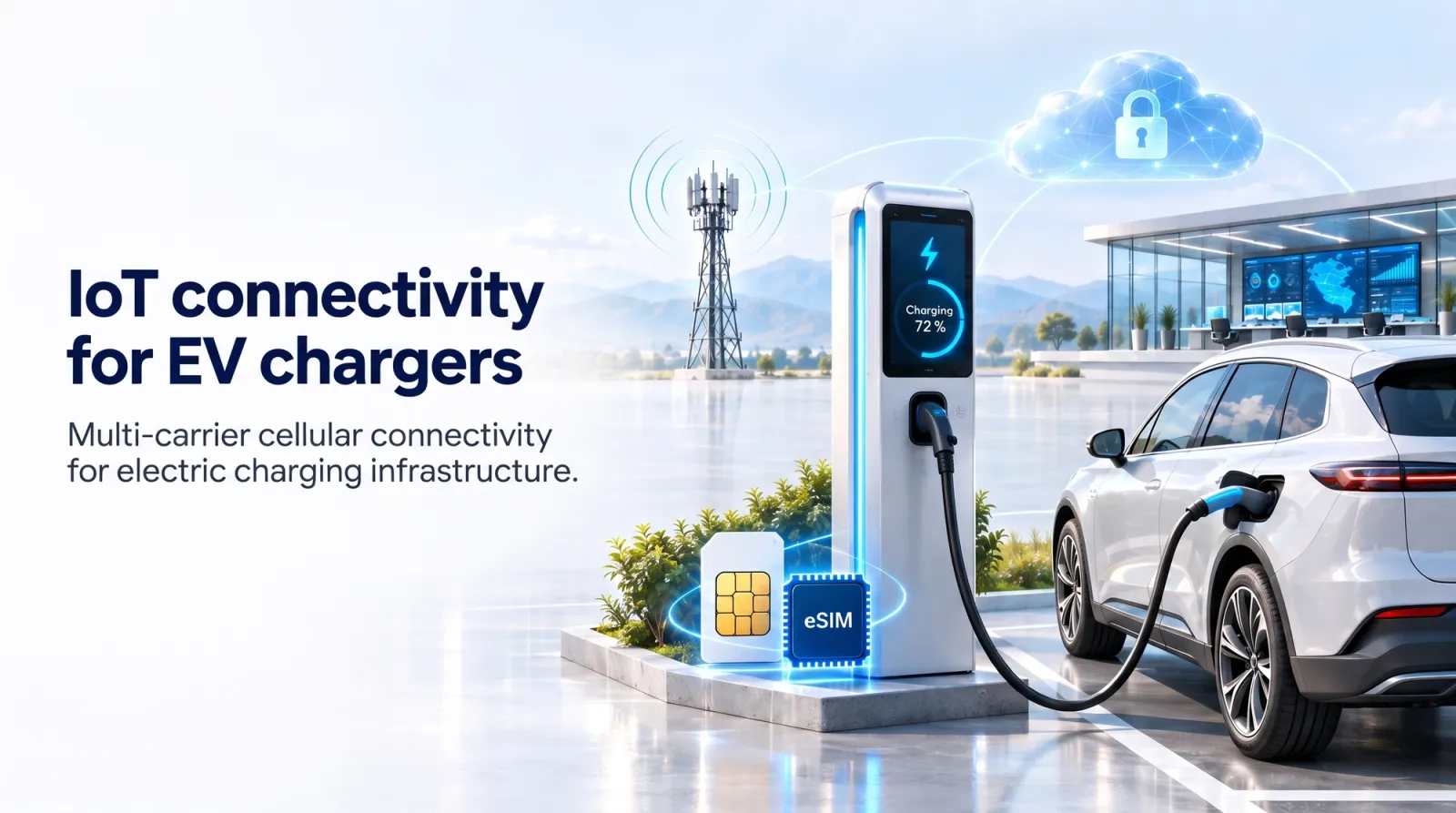
Multi-carrier IoT SIMs for distributed EV chargers, with centralized management of status, consumption and connected network, and evolution from Public APN to private connectivity.
01 / Context
A growing EV infrastructure operation needed connectivity that was easier to manage.
A Peruvian company specializing in EV charging infrastructure deploys electric chargers at distributed locations nationwide.
Growth made four challenges more visible: variable coverage, limited line visibility, fragmented management and the need to standardize connectivity for new installations.
Operations adopted a model of managed IoT connectivity to administer charger lines under a single service logic.
02 / Design criterion
Connectivity had to keep pace with the growth of EV infrastructure.
The chargers incorporate a GPRS/LTE cellular module with SIM. Over that interface, multi-carrier IoT SIMs, data traffic and centralized line management were deployed to standardize connectivity for new installations.
The project began with a pilot validation on real equipment and a public access architecture, allowing the integration to be verified before extending the model to new installations.
03 / Connectivity service
One connectivity model for distributed EV chargers.
The service connects each EV charger's cellular module with its authorized operating environment.
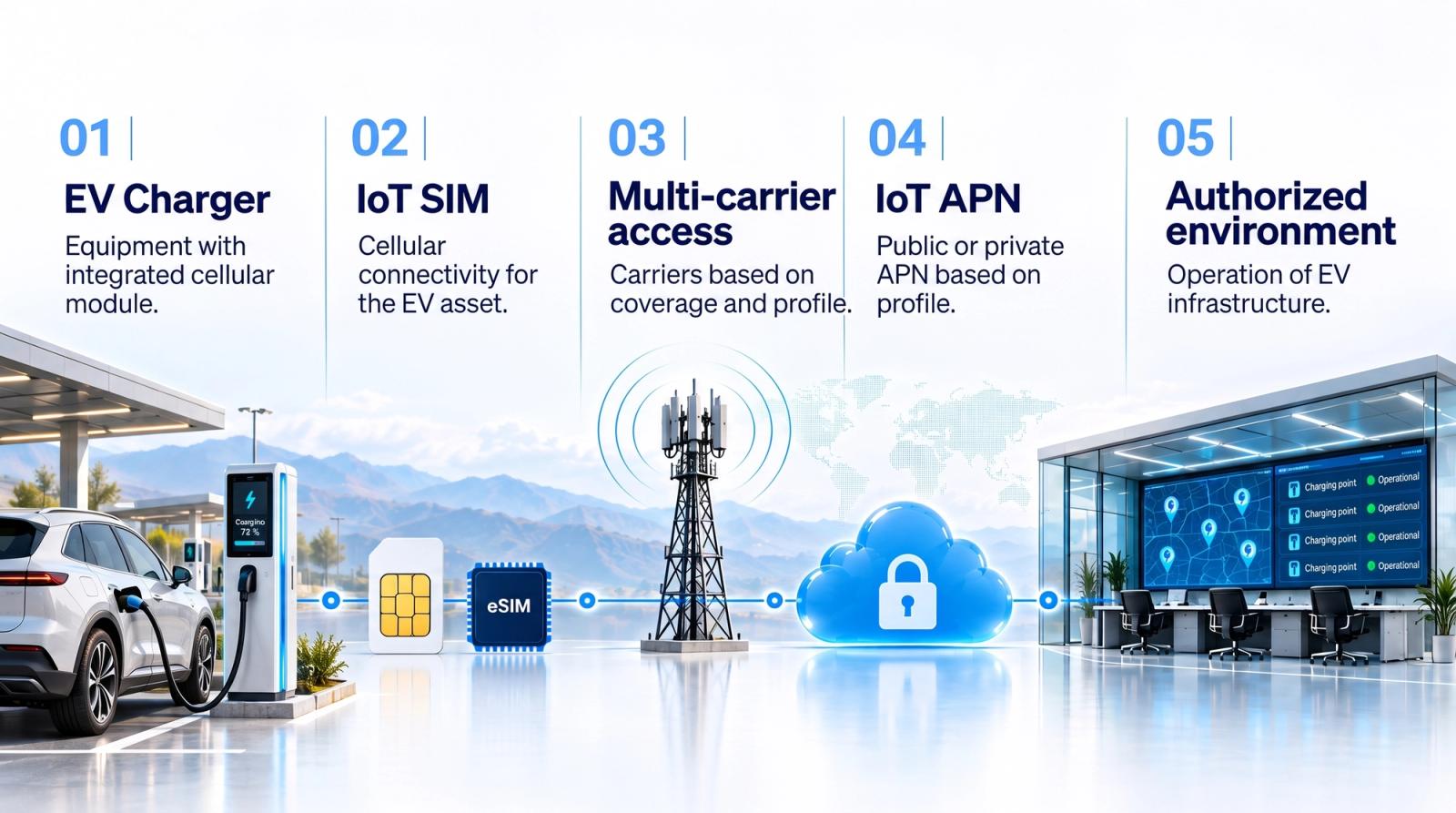
The centralized connectivity management allows reviewing each SIM's status, consumption per line and period, upload and download data volume, the network or carrier it connected to, behavior history and reports available according to the contracted profile.
Products that sustain the model.
Multi-carrier connectivity for EV chargers
The lines use carriers enabled based on coverage and service profile.
Visibility over each IoT SIM
Status, consumption, upload and download data volume, connected network or carrier, history and reports from centralized management.
From Public APN to Private APN + VPN
Connectivity evolved toward a private environment when EV operations required it.
04 / Service evolution
From Public APN to Private IoT: Private APN + VPN.
The first stage used Public APN and centralized line management. As operations matured, the service evolved toward Private IoT via Private APN and VPN interconnect, responding to new private connectivity and control requirements.
The same M2M service was able to keep pace with that evolution as operational and security requirements grew.
05 / Result
From an EV pilot to dozens of connections under one model.
Deployment continued as new growth, incorporating EV chargers and new charging points under the same IoT SIM, management and connectivity model.
Today, dozens of connections operate with greater control and visibility over the connectivity service; centralized management allows reviewing status, consumption, traffic and connected network, while local support allows validating connectivity first when an EV charger loses communication.
The fundamental change: connectivity stopped being managed as isolated mobile lines and began operating as managed IoT infrastructure for EV operations.
Related solutions
Connectivity ecosystem for EV projects.
From IoT/eSIM SIMs and APNs to private connectivity and controlled access, the portfolio enables defining the connectivity path based on coverage, device, destination and project requirements. Available for projects in Peru and other Latin American markets, subject to coverage, device and service profile.