BRCO Global EN

Private IoT APN

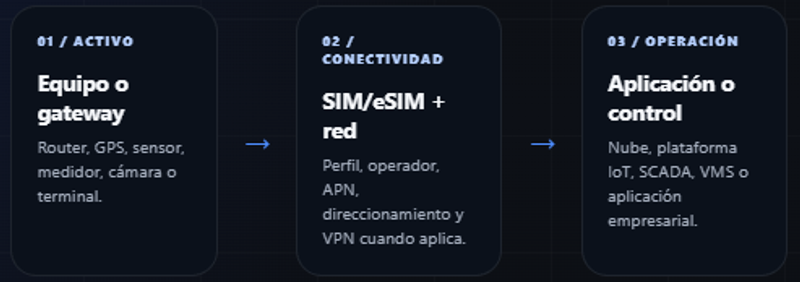
Private connectivity to access and integrate IoT assets.

A private APN, controlled addressing, defined routes and IPsec-protected connectivity to authorized users, data centers or cloud environments.

Use a managed access service or connect the mobile network directly to your infrastructure. Controlled Internet breakout can be added when the application requires it.

Operations and supportNetworks and cybersecurityOT / SCADAIoT integrators
Service models

Two ways to operate the same private connectivity layer.

The first decision is operational: who will manage access and where connectivity must terminate. The technical architecture follows from that choice.

Managed remote access

Private IoT Managed Access

For organizations that need to view, diagnose or configure compatible devices from authorized locations without operating their own IoT access environment.

The Managed Access model operates the connectivity and access layer within the contracted scope. The ability to operate a device depends on its services, credentials, firewall and application.

●

Managed private APN

●

Private addressing

●

Controlled gateway and access

●

Users and policies within contracted scope

●

Line and usage management

●

Optional Internet access from the managed environment
Dedicated private integration

Private IoT Dedicated Connect

For organizations that need to integrate assets directly with a corporate network, data center or cloud environment through a project-defined IPsec connection.

The customer participates in configuring and validating the VPN endpoint, routes, firewalls and platforms. Continuity and redundancy are designed according to the required service level.

●

Private APN per organization

●

IPsec VPN to CPE or cloud

●

Project-defined addressing

●

Static routing or BGP

●

Integration with networks and platforms

●

Optional BGP Controlled Breakout

Dedicated Connect

Private routing or controlled Internet breakout.

Both options retain the private APN. The difference is where traffic must go and how routes are announced.

Private Route

Direct private integration

Authorized destinations remain within the customer network or cloud. Static routes fit simple environments, while BGP supports more flexible architectures.

Direct private integration

Best fit

SCADA, private telemetry, corporate platforms, gateways and OT applications.

Controlled Breakout

Private traffic with controlled Internet breakout

Corporate prefixes travel through the VPN while authorized Internet services use a separate egress path. This model requires BGP and addressing planning from the start.

Private traffic with controlled Internet breakout

Best fit

A corporate backend combined with vendor cloud, updates, APIs or approved SaaS services.

CriterionPrimary destination
Private RoutePrivate network, data center or customer cloud
Controlled BreakoutPrivate network and authorized Internet services
CriterionRouting
Private RouteStatic or BGP
Controlled BreakoutBGP
CriterionInternet access
Private RouteNot included by default
Controlled BreakoutOptional and separated by routing policy
CriterionRecommended design
Private RouteDirect private integration
Controlled BreakoutHybrid architecture with multiple destinations

Operational distinction. With Managed Access, Internet egress is governed from the managed service environment. With Dedicated Connect, Controlled Breakout uses BGP to separate routes to customer infrastructure and authorized Internet destinations. Security scope. Internet egress does not enable direct inbound device access by default and does not replace application security. Availability, addressing, filtering and redundancy are validated by country, operator and service profile.

From design to operation

A controlled implementation before scaling.

Implementation coordinates connectivity, the APN and commissioning. Network, cloud, firewall, device-vendor and application teams can be involved according to project responsibilities.

What the project receives.

A process designed around the asset, destinations and required access level.

01

Assessment

Device, application, traffic, coverage and communication direction.

02

Design

Addressing, routes, access, Internet requirements and continuity.

03

Configuration

SIMs, APN, VPN, policies, profiles and users according to the selected model.

04

Testing

Connectivity, isolation, reconnection, permissions and authorized destinations.

05

Operations

Documentation, support, follow-up and connectivity management.

Final capabilities are subject to technical assessment, device compatibility, customer participation, coverage conditions and mobile-service availability.

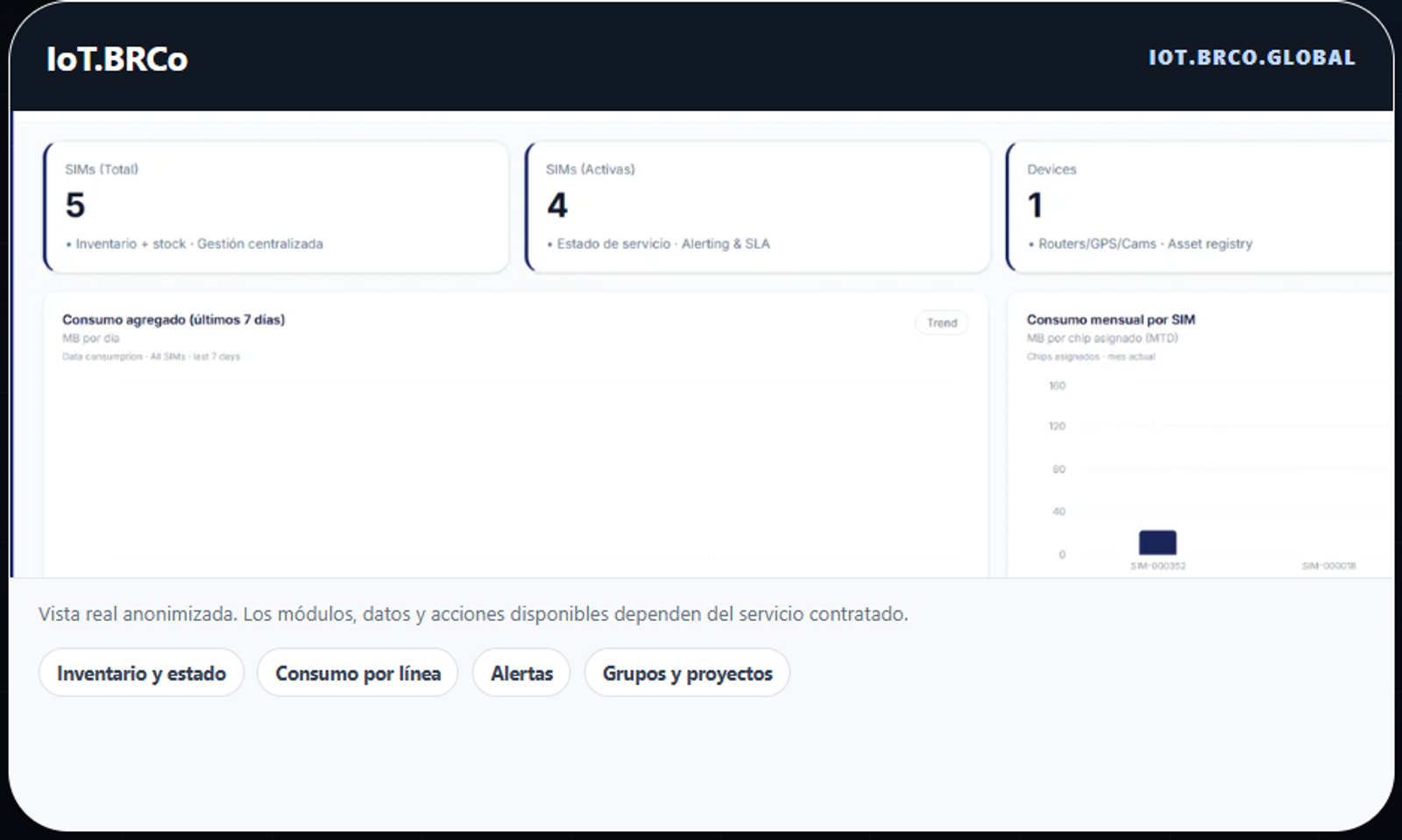
IoT Portal

Centralized management
IoT Portal
Architecture assessment

Define the right model before provisioning.

Share the device, destinations and who needs to initiate communication. We will assess the appropriate service model, routing and pilot.

  • Device and modem
  • Network, cloud or users
  • Traffic direction
  • Required continuity

I agree to the processing of my personal data according to the privacy policy.